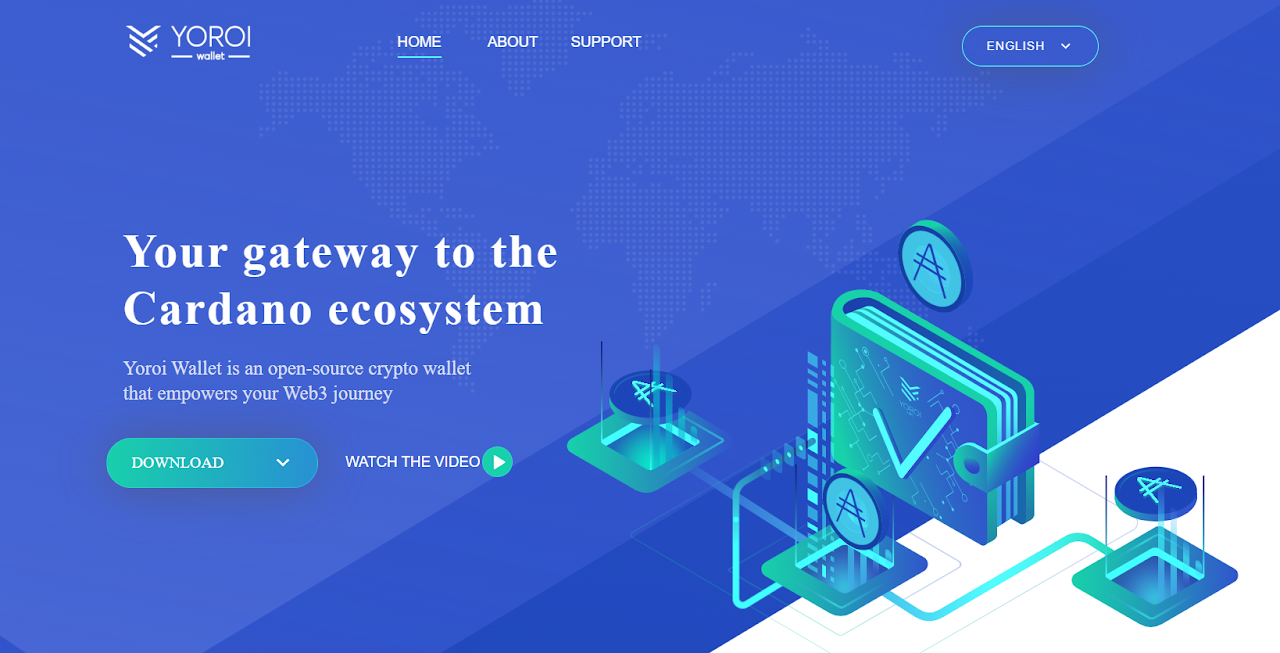
Managing cryptocurrency becomes easier when you have a wallet that helps you organize your digital assets. Yoroi Wallet was developed by EMURGO as a lightweight wallet for the Cardano blockchain. It was designed to help users manage ADA and interact with Cardano's digital asset ecosystem through a straightforward interface.
Unlike a full-node wallet, Yoroi was built to work without downloading the entire Cardano blockchain. This lightweight approach made it convenient for users who wanted to access their cryptocurrency through a supported browser or mobile device.
Important update: Yoroi's official website now states that Yoroi and SecondFi are being wound down following a security incident. Existing users should consult official announcements for guidance on safely migrating their assets before relying on the service.
Yoroi was designed around accessibility, asset management, and interaction with the Cardano network. Its main features included:
These features made Yoroi a recognizable option among Cardano users seeking a relatively simple cryptocurrency management experience.
Understanding the potential advantages of Yoroi helps explain why it attracted users within the Cardano community.
Yoroi emphasized a clean, accessible design. Users could navigate wallet functions without needing advanced blockchain knowledge, making the original experience approachable for newcomers.
Because Yoroi did not require downloading the entire Cardano blockchain, it offered a more convenient approach than full-node wallet software.
Yoroi supported ADA delegation, allowing users to participate in Cardano's proof-of-stake ecosystem. Staking rewards are variable and are never guaranteed.
The wallet provided tools for managing ADA and compatible native assets, helping users organize their Cardano-related holdings in one interface.
Yoroi was designed as a self-custodial wallet, giving users control of their wallet credentials. However, self-custody also means users must protect their recovery phrase and understand the risks of unauthorized access.
Digital asset security should always be a priority. Visit official announcements before taking action involving an existing Yoroi wallet. Never trust unsolicited messages offering urgent recovery assistance.
Keep your recovery phrase offline in a secure location, and never share it with websites, support agents, or strangers. Verify wallet addresses carefully before sending cryptocurrency. Avoid downloading wallet software from advertisements or unfamiliar websites.
If you currently hold assets in Yoroi, follow verified migration instructions and independently check the destination wallet before transferring funds. Never enter your recovery phrase into an unverified website.
1. What was Yoroi Wallet used for?
Yoroi was used to manage ADA, interact with Cardano assets, and access supported blockchain features.
2. Did Yoroi support ADA staking?
Yes. Yoroi supported delegation to Cardano stake pools, although rewards depended on network conditions and other factors.
3. Was Yoroi suitable for beginners?
Its lightweight design and straightforward interface made it approachable for many cryptocurrency newcomers.
4. Is Yoroi Wallet still operating normally?
No. Its official website reports that Yoroi and SecondFi are being wound down following a security incident. Existing users should follow verified official guidance.
Yoroi Wallet played an important role in making Cardano cryptocurrency management more accessible through lightweight wallet technology, ADA support, and staking functionality. Its original advantages included convenience, a beginner-friendly interface, and access to Cardano assets. However, users should prioritize the latest official wind-down and migration guidance rather than treating Yoroi as an unaffected, actively supported wallet. Protecting recovery credentials and verifying every migration step remain essential for safeguarding digital assets.